
How to Separate Cream at Home

Anyone who is, or has ever been, a raw milk drinker knows that “the cream line” is one of the best things about raw milk - after the incredible health benefits, of course. If you’re new to this topic, let me explain…
When raw milk is left alone for a little while, the cream naturally separates itself from the milk and rises to the top of the container. If milk is in a clear container - like a glass mason jar - you can see this magical process. The cream line is an actual line you can see where above it is thick cream that’s more of an off-white/almond or even a yellowish tinted color for some cows. Below the line you will find thinner, more opaque-colored milk.
It’s also important to mention that there is a difference between SKIM milk and SKIMMED milk. Skim milk (pink cap) at the grocery store is milk that has zero cream/fat in it. This milk has been mechanically separated to get every single drop of cream out. If you are skimming cream from milk at home by hand, there is no person that efficient that could get all the cream off. Hand-skimmed milk is probably closer to the 2% milk (blue cap) from the store and still perfectly good to use to drink, cook or bake with, and use as you would any other type of milk.
It doesn’t make sense for the average raw milk household to keep and use a cream separator - they’re a big financial investment, bulky to store, and honestly not really user-friendly. Add to this that it’s quite a process to assemble, disassemble, and properly clean, most people don't (and will never) have or use one. We have one and only use it when we have massive amounts of milk. If I'm skimming less than 8-10 gallons, I'm doing it by hand.
But good news! There are several simple ways you can separate cream at home using simple kitchen tools.
Whichever of these methods you use, you will have to let the milk sit undisturbed (still refrigerated) for at least 12-24 hours. The longer you wait the thicker the cream will get as the milk has more time to separate. It is also worth mentioning that all containers and utensils you use should be very clean.
Ladle Method
This is the method I prefer. I think it's the easiest, cleanest, and quickest.
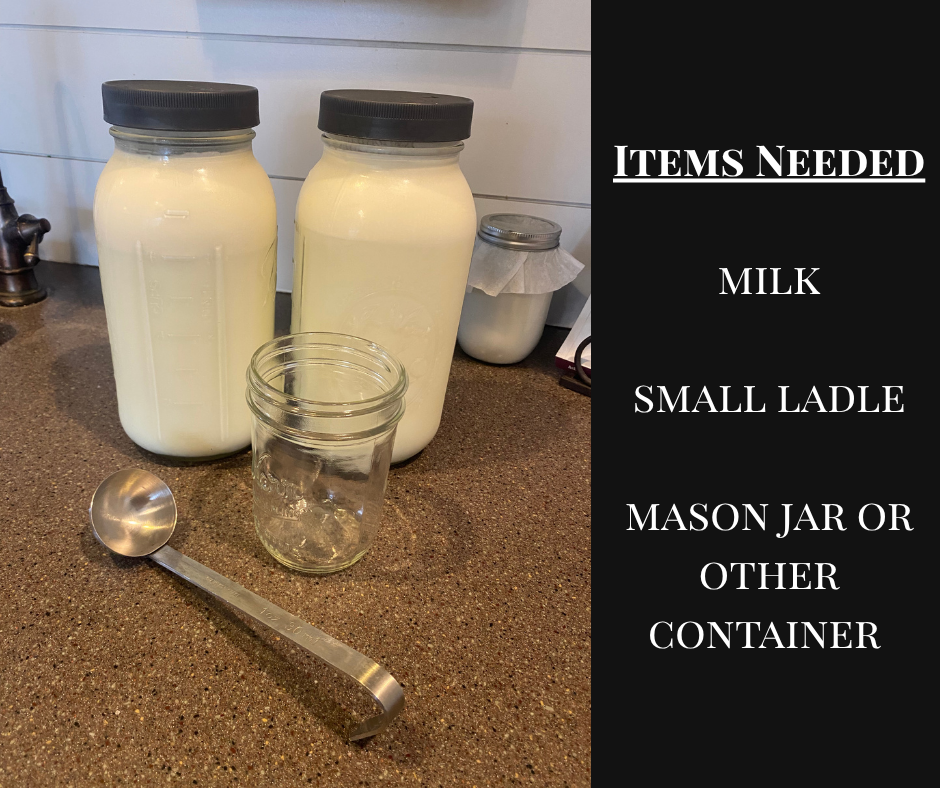
Holding the ladle at an angle, dip it into the cream and scoop it off the top making sure you don't dip below the cream line. Then transfer the cream in the ladle into your jar or other container. Repeat as necessary to get as much cream as you can (or the amount you want). I usually rotate the jar a quarter turn with each scoop and stay close to the side of the jar. If you end up with some milk, that's not a big deal, but I try to get just cream.

I personally use a small gravy ladle to skim cream for our family. We use the cream to make butter, sour cream, half & half, homemade ice cream, and regular recipes. I purchased my ladle from Beachy’s in Arthur, so this isn’t the exact one that I have, but it’s similar.

And that's it! As you can see, I didn't try to get every last drop of cream from these two jars. I ended up with a full pint, and that was enough. Plus, leaving a little bit of cream is a good idea, especially if you are going to use the milk for drinking.
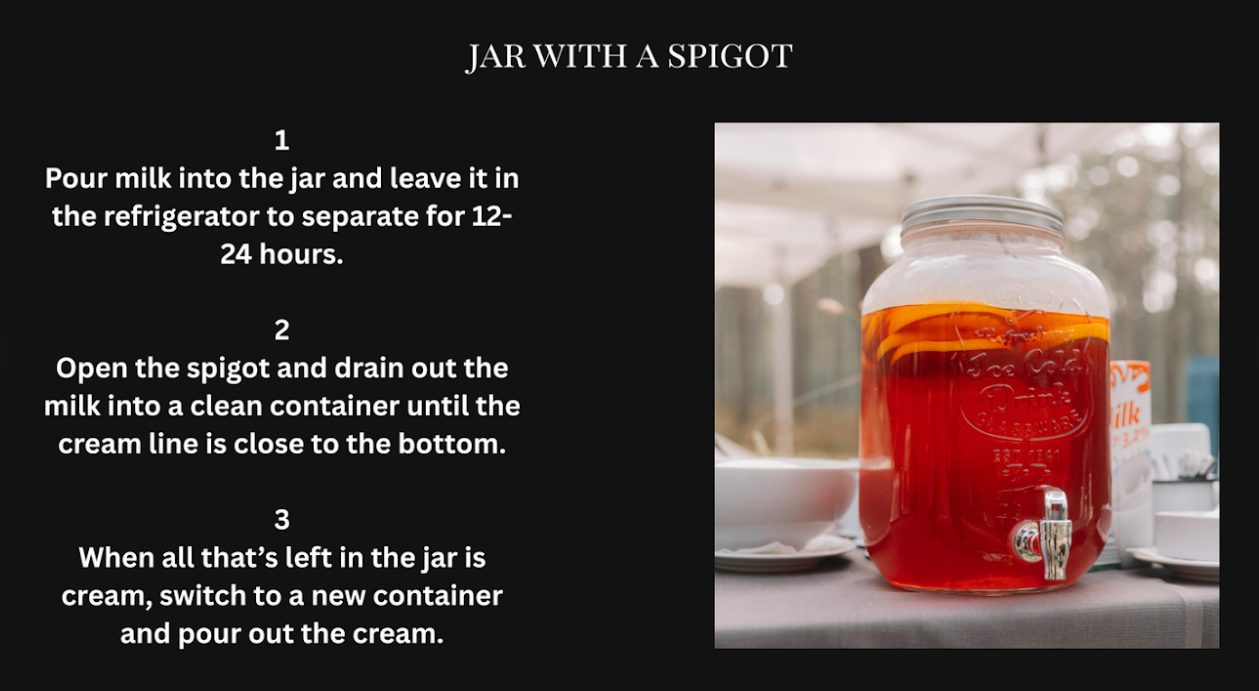
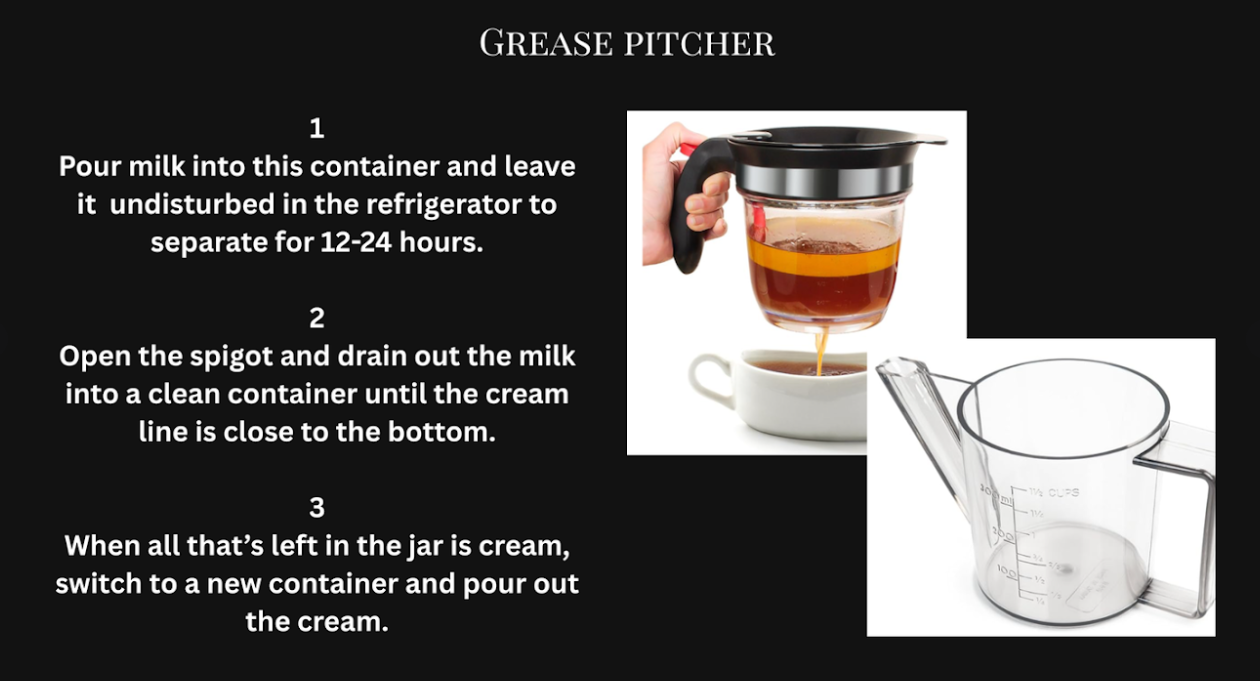
These next three suggestions are just ideas and methods I have seen/heard about second-hand. I have not tried any of these, because ladling the cream off works so well for me. But I just thought I would mention these because what works for me, might not work for someone else, and it's always good to have a back-up plan!
Also, I don't have these tools/items in my house, so I'm using photos from Amazon.
Spigot on a Jar
Meat (Turkey) Baster

Grease Pitcher
So, if you decide to use one of these methods to skim off some of that delicious cream for other things, what do you do with the leftover milk if you don't need it right now to use fresh? Here are a few ideas for using skimmed milk if you would rather not use it as “regular milk” for drinking...
- Make skimmed milk mozzarella for cooking/baking (not great for eating fresh as it can be a little rubbery)
- Make skimmed milk soft cheese - ricotta, feta, cottage cheese
- Add to smoothies or protein shakes
- Make dry/hard cheeses like parmesan or romano that do well with low-fat milks
- Make yogurt with 100% skimmed milk or 50/50 skimmed and whole milk
- Use for cooking - breads/cakes/muffins, soups, gravy, pudding, mashed potatoes,
- Steam or froth skimmed milk for hot beverages
- Sour it / use to feed clabber culture or use to culture kefir grains
- Dilute it with water and use it as a plant fertilizer in your garden. (I don’t recommend using this for inside/house plants.)
- Feed it as is to your pets as a treat or clabber it to give to chickens